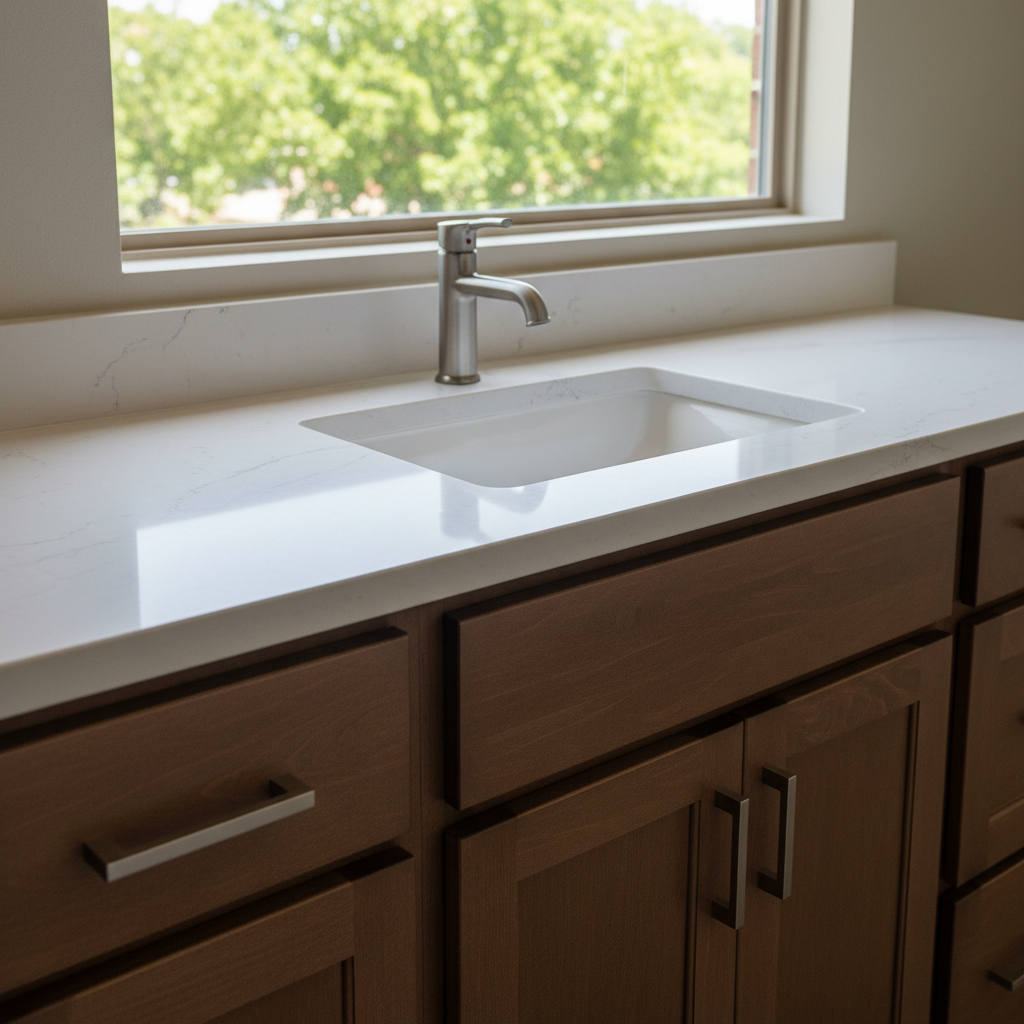
Thinking about a new vanity and sink for your bathroom? Awesome! It's one of those projects that can really change how a space feels without needing a whole gut job. But I know folks around Owasso have a lot of questions before they jump in. I hear them all the time. So, I figured I'd just lay out some straight answers to the most common ones.
What's the real difference between a vanity and a pedestal sink?
This is a big one. A pedestal sink is exactly what it sounds like: a sink basin sitting on a pedestal. They're usually pretty small, open underneath, and give a bathroom a more classic, airy look. Pedestal sinks are great for powder rooms or smaller bathrooms where you don't need much storage. The catch? You don't get any counter space, and nowhere to stash your extra toilet paper or cleaning supplies.
A vanity, on the other hand, is a cabinet with a countertop and a sink built right in. It's super practical. You get storage space inside the cabinet—drawers, shelves, whatever you choose—plus counter space around the sink. Most master bathrooms and even secondary bathrooms these days go with a vanity because, well, people just need that extra storage. It's a trade-off between style and function, really. Most of our clients at Horizons Kitchens & Bathrooms tend to pick vanities for the sheer utility.
Can I install a new vanity myself, or should I hire a pro?
Look, I'm not gonna tell you it's impossible to DIY. If you're handy, you've got the right tools, and you understand basic plumbing and carpentry, you *could* do it. You'd need to be comfortable shutting off water, disconnecting and reconnecting supply lines and drains, maybe even cutting holes for plumbing, and making sure everything is level and secure. And if you're messing with electrical for a lighted mirror or outlet, you really need to know what you're doing.
But here's what I've seen: a lot of DIY vanity installs end up with leaks, wobbly cabinets, or crooked sinks. Sometimes folks don't account for the supply lines coming out of the wall, or they overtighten fittings and crack something. Plus, moving heavy vanities, especially larger double ones, can be a real pain. If you're not confident, or if you're dealing with custom sizes or tricky plumbing, hiring a pro like us is usually worth it. We'll get it done right, fast, and you won't have to worry about water damage down the line. Trust me on that one.
How do I know what size vanity will fit my bathroom?
This isn't just about measuring the wall. You gotta think about door swings, shower clearances, and even toilet space. Grab a tape measure and check the width of the wall where the vanity will go. Then, measure from the wall out to where you want the front of the vanity to sit—that's your depth. Standard depths are usually 18 or 21 inches, but you can find shallower ones for tight spaces. Don't forget the height, either. Standard vanity height used to be around 30-32 inches, but now 34-36 inches (countertop height) is more common for comfort.
Crucially, make sure you have at least 15 inches from the center of the toilet to the side of the vanity. That's code, and it's also just good sense for comfort. And if your bathroom door swings inward, make sure the new vanity won't block it. Sometimes, in older Owasso homes, especially in neighborhoods like Stone Canyon, bathrooms can be a bit tight, so every inch counts.
What's the deal with different sink types – undermount, drop-in, vessel?
You've got options! Each has its own look and practical considerations.
- Undermount sinks: These are installed *under* the countertop. They give you a sleek, seamless look and make cleaning the counter super easy because you can just wipe crumbs and water right into the sink. They usually need a solid surface countertop like granite, quartz, or marble.
- Drop-in (or self-rimming) sinks: These drop into a cutout in the countertop, and the rim of the sink sits on top. They're often less expensive to install and can work with a wider variety of countertop materials, including laminate. The rim can collect grime, though.
- Vessel sinks: These sit entirely on top of the counter, like a bowl. They're a strong design statement and can look really modern or artistic. The downside is they take up counter space, and you usually need a taller faucet. They also tend to splash a bit more if you're not careful.
- Integrated sinks: The sink and countertop are one piece, often made of cultured marble or solid surface material. Very easy to clean, no seams.
Each type affects the overall look and how you'll use the space, so think about what's most important to you.
How long does a typical vanity and sink installation take?
For a straightforward replacement—meaning the new vanity is roughly the same size and the plumbing lines don't need to be moved—we can often get it done in a single day. That includes disconnecting the old, setting the new cabinet, installing the countertop and sink, connecting the faucet and drain, and sealing everything up. Maybe a half-day, depending on how complex it is.
If we're talking about moving plumbing lines, cutting into walls, or dealing with custom cabinetry, then it's going to take longer. That could be a couple of days, especially if we need to let caulk or grout cure. We always give you a clear timeline upfront, so you know what to expect.
Do I need to worry about the specific water pressure in Owasso for my new faucet?
Not usually a major concern for a standard faucet. Owasso's municipal water pressure is generally pretty consistent and within the normal range for residential plumbing. Most modern faucets are designed to work well with typical home water pressure. However, if you've got an older home with really old, narrow pipes, or if you're installing a very specific type of low-flow faucet, you might notice a slight difference. If you've had pressure issues elsewhere in your house, that's something to mention to us, but for a typical vanity and sink swap, it's usually not a big deal. We'll test it all out once it's installed to make sure everything's flowing right.
What about moisture and humidity in the bathroom? Any special considerations for the vanity?
Absolutely. Bathrooms are wet places, especially here in Oklahoma with our humid summers and steamy showers. You want a vanity that can handle it. Particleboard or MDF vanities, while cheaper, can swell and warp over time if they're not properly sealed or if they get constant exposure to water. Solid wood or plywood construction with a good quality finish is always a better bet for longevity.
Make sure the area around the sink is properly caulked with a good silicone sealant. This prevents water from seeping into the cabinet or down the walls. Good ventilation is key too—always use your exhaust fan during and after showers to pull that moisture out. It's not just for the vanity; it helps prevent mold and mildew throughout your bathroom. We always use moisture-resistant materials and sealants when we do installs at Horizons Kitchens & Bathrooms, because we know you want this investment to last.